

Get your free painting estimate
Fill out the form and we will reach out with your free estimate.
No pressure, no obligation. Free quotes. Privacy Policy & Terms
Crocker Home Painting Company – Privacy Policy and Terms of Service
Effective Date: 1/1/2025
Welcome to Crocker Home Painting Company (“we,” “our,” or “us”). Your privacy and trust are important to us. This page outlines our Privacy Policy and Terms of Service. By using this website, you agree to the terms and policies outlined below.
1. Privacy Policy
1.1 Information We Collect
Personal Information: We collect your name, email address, phone number, and other details when you submit contact forms, request estimates, or sign up for newsletters.Non-Personal Information: We automatically collect data such as your IP address, browser type, and pages visited through cookies and analytics tools.
1.2 How We Use Your Information
We may use your information to:
– Provide painting services and respond to your inquiries
– Schedule consultations and send service updates
– Send newsletters, promotions, or updates (with your consent)
– Analyze website traffic and improve user experience
– Ensure security and prevent fraudulent activity
1.3 Use of Cookies and Tracking Technologies
We use cookies to enhance your experience. Cookies help us understand how visitors interact with our website. You can manage cookie settings in your browser. Disabling cookies may affect certain site features.
1.4 Third-Party Services
We may use third-party services such as Google Analytics to monitor website performance. Third-party links may direct you to external websites with their own privacy practices.
1.5 Data Security
We use industry-standard security measures to protect your personal information. However, no method of transmission over the Internet is completely secure, and you provide your information at your own risk.
1.6 Your Privacy Rights
You may:
– Request access to or deletion of your personal data
– Opt-out of receiving promotional emails via the “unsubscribe” link
– Manage cookies through your browser settings
⚖️ 3. Terms of Service
3.1 Acceptance of Terms
By accessing and using the Crocker Home Painting Company website (the “Website”), you agree to these Terms of Service. If you do not agree, please do not use the website.
3.2 Use of the Website
– You may use the website for lawful purposes only.
– You agree not to use the site in any way that could damage it or impair other users’ experiences.
– We reserve the right to terminate access for users who violate these terms.
3.3 Intellectual Property
All content on this website, including text, images, logos, and designs, is the property of Crocker Home Painting Company and protected by copyright laws.You may not copy, reproduce, or distribute any content without written permission.
3.4 Disclaimer of Warranties
The content on this website is provided “as is” without warranties of any kind.We do not guarantee that the site will be error-free or continuously available.
3.5 Limitation of Liability
To the fullest extent permitted by law, Crocker Home Painting Company will not be liable for any damages arising from your use of the site, including direct, indirect, or incidental damages.
3.6 Changes to These Terms
We may update these Terms of Service from time to time. Changes will be posted on this page with an updated effective date. Your continued use of the website indicates acceptance of the new terms.
📞 4. Contact UsIf you have any questions regarding our Privacy Policy or Terms of Service, please contact us:📧 Email: Contact Page
* Price estimate is for standard grade Paint/Stain other materials only. 1* Each project is unique, and overall complexity can vary. Power washing, scraping, surface preparation, and any necessary repairs will be evaluated individually for each job. Pricing shown is for general guidance only and does not represent a final quote. Any accepted quote will be in writing and signed by Customer and Crocker Home Painting Company. Actual costs can vary significantly based on numerous factors, including the type and condition of surfaces, the age of the home, previous coatings, extent of wear and tear, amount of prep work required, color changes, number of coats, material selections, accessibility, and overall project complexity. Additional considerations such as surrounding terrain, landscaping, slope, and ease of access to different areas of the property can also influence pricing. Photos and details provided by the customer help us offer a more accurate estimate, but pricing may change if additional conditions or requirements are identified during project planning. All examples, ranges, and descriptions are illustrative and subject to adjustment based on the specific circumstances of each individual project. 1* Customer will approve in writing any and all services performed by Crocker Home Painting Company. and approve of the type and specific color of any paint, stain or any other coating.
As an Amazon Associate, I earn from qualifying purchases. Privacy Policy / Terms
Ever cracked open a can of paint and thought, “What exactly am I about to slather all over my walls?” If you have, you’re not alone. Most people grab a color they love, maybe check if it’s interior or exterior paint, and that’s about it. But paint is actually a complex mixture of chemicals and compounds, each with a very specific role. Let’s break it down in a way that makes sense—no chemistry degree required.
The Four Main Ingredients in Paint
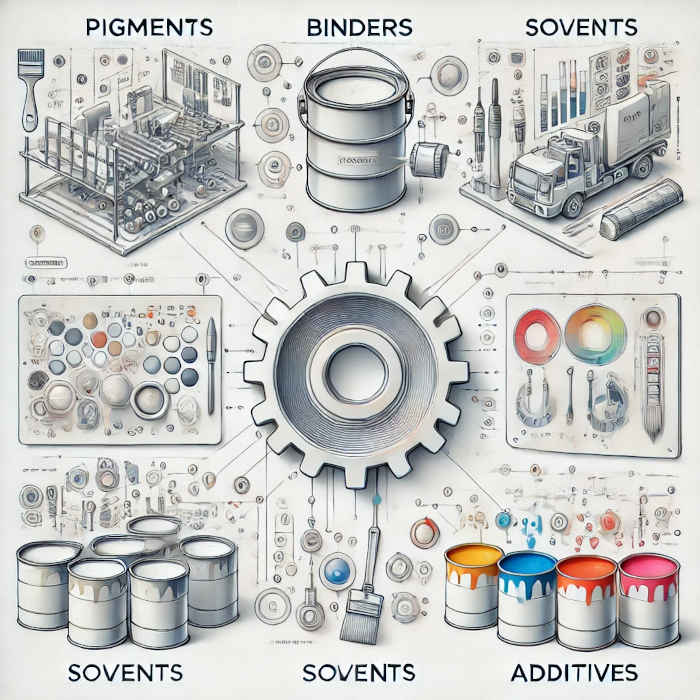
At its core, paint is made up of four primary components: pigments, binders, solvents, and additives. Each plays a crucial part in making sure your walls look amazing and stay that way.
1. Pigments: The Color Powerhouse
Pigments are what give paint its color. They can be natural, synthetic, or a mix of both. There are two types:
- Primary Pigments – These are responsible for the actual color. Common examples include titanium dioxide (for whites and lighter shades) and iron oxides (for reds and browns).
- Extender Pigments – These help with coverage and performance. Think of calcium carbonate or clay, which make sure the paint isn’t too translucent.
Basically, without pigment, paint would be nothing more than a clear goo.
2. Binders: The Glue That Holds It All Together
Binders are what make paint stick. Once the paint dries, binders form a solid film, locking in the color and giving the paint its performance. Common binders include:
- Acrylic (used in latex paint)
- Alkyd (Oil-Based Binders) (used in traditional oil paints)
- Epoxy & Polyurethane (used in specialty paints for extreme performance)
In other words, binders are the reason your paint doesn’t just wash away after the first rainstorm or wipe-down.
3. Solvents: The Liquid Carrier
Solvents keep paint in liquid form until it’s applied. Once it’s on your walls, the solvent evaporates, leaving behind only the pigment and binder.
- Water-Based Paints (Latex & Acrylic) use water as the solvent.
- Oil-Based Paints use mineral spirits or other organic solvents.
The type of solvent affects drying time, odor, and clean-up. If you’ve ever been hit with that strong “paint smell,” you were inhaling evaporating solvents (which is why ventilation is so important when painting).
4. Additives: The Secret Sauce
Additives are the behind-the-scenes heroes that improve the paint’s performance. Depending on the paint type, additives might:
- Prevent mildew growth (great for bathrooms and humid climates)
- Reduce splattering (because no one enjoys paint freckles)
- Improve leveling (so brush strokes don’t look like a toddler helped out)
- Boost drying time (because waiting forever isn’t fun)
Additives are like the seasoning in your favorite dish—small but essential.
What Happens When Paint Dries?
You roll or brush paint onto a surface, but what’s happening at a microscopic level? Here’s a simple version:
- Solvent Evaporation – The liquid portion of the paint (water or oil-based solvent) starts to evaporate.
- Binder Activation – As the solvent leaves, the binder molecules lock together, forming a film that holds the pigment in place.
- Curing – Some paints (like oil-based or epoxy paints) continue to chemically react for days or weeks, hardening into an ultra-solid finish.
Latex paints dry fast (sometimes within an hour), while oil-based paints take much longer. The next time you impatiently watch paint dry, know there’s some real science happening!
Water-Based vs. Oil-Based Paint: Which One’s Better?

Both have their pros and cons, and the choice depends on the project.
- Water-Based (Latex & Acrylic)
- Fast drying
- Low odor
- Easy clean-up with soap and water
- More environmentally friendly
- Oil-Based (Alkyds)
- Smoother, glossier finish
- More solid for trim and cabinets
- Takes longer to dry
- Requires harsh chemicals for clean-up
For most DIY projects, latex paint is the go-to option. But oil-based paints still have their place, especially for high-wear areas.
Why Some Paints Cost More Than Others
Ever wonder why some paints cost $20 a gallon while others push $80? It all comes down to the quality of ingredients.
- High-End Paints have more titanium dioxide (which improves coverage), higher-quality resins (for performance), and better additives (for smooth application and longevity).
- Cheaper Paints have more filler, meaning you may need extra coats to get the same coverage.
Paying more upfront can save you time and effort in the long run.
Specialty Paints: More Than Just Color
Paint isn’t just about color anymore. There are specialized paints for nearly every scenario:
- Anti-Microbial Paints – ideal for hospitals or germ-conscious homes.
- Chalkboard & Dry-Erase Paints – Turn any surface into a writing board.
- Magnetic Paints – Because who doesn’t want a wall that holds magnets?
- Heat-Resistant Paints – Ideal for fireplaces and grills.
- Low-VOC & Zero-VOC Paints – For better air quality and fewer headaches.
If you have a unique painting need, chances are there’s a formula for it.
The Future of Paint: Smarter & Greener
Like everything else, paint is evolving. Companies are creating:
- Self-Cleaning Paints that break down dirt when exposed to sunlight.
- Air-Purifying Paints that neutralize odors and toxins.
- Solar-Reflective Paints to keep buildings cooler and reduce energy bills.
Paint is no longer just decoration—it’s turning into an advanced technology.
Final Thoughts: The Magic in the Can
Next time you pick up a can of paint, you’ll know it’s not just colored liquid. It’s a carefully crafted mixture of science and art, designed to make your space beautiful, solid, and even functional.
So whether you’re rolling on a fresh coat in your living room or spraying down your front door, you can appreciate the chemistry happening beneath each brushstroke. And hey, knowing what’s really inside that can might just make your next paint job feel a little more satisfying.
Views Expressed Disclaimer
The views, opinions, and information presented in this article are for informational purposes only and do not necessarily reflect the official policies or positions of Crocker Home Painting Company. While every effort has been made to ensure accuracy, Crocker Home Painting Company is not liable for any errors, omissions, or decisions made based on the content provided. Readers are encouraged to consult professionals for specific advice or assistance related to their unique circumstances.