

Get your free painting estimate
Fill out the form and we will reach out with your free estimate.
No pressure, no obligation. Free quotes. Privacy Policy & Terms
Crocker Home Painting Company – Privacy Policy and Terms of Service
Effective Date: 1/1/2025
Welcome to Crocker Home Painting Company (“we,” “our,” or “us”). Your privacy and trust are important to us. This page outlines our Privacy Policy and Terms of Service. By using this website, you agree to the terms and policies outlined below.
1. Privacy Policy
1.1 Information We Collect
Personal Information: We collect your name, email address, phone number, and other details when you submit contact forms, request estimates, or sign up for newsletters.Non-Personal Information: We automatically collect data such as your IP address, browser type, and pages visited through cookies and analytics tools.
1.2 How We Use Your Information
We may use your information to:
– Provide painting services and respond to your inquiries
– Schedule consultations and send service updates
– Send newsletters, promotions, or updates (with your consent)
– Analyze website traffic and improve user experience
– Ensure security and prevent fraudulent activity
1.3 Use of Cookies and Tracking Technologies
We use cookies to enhance your experience. Cookies help us understand how visitors interact with our website. You can manage cookie settings in your browser. Disabling cookies may affect certain site features.
1.4 Third-Party Services
We may use third-party services such as Google Analytics to monitor website performance. Third-party links may direct you to external websites with their own privacy practices.
1.5 Data Security
We use industry-standard security measures to protect your personal information. However, no method of transmission over the Internet is completely secure, and you provide your information at your own risk.
1.6 Your Privacy Rights
You may:
– Request access to or deletion of your personal data
– Opt-out of receiving promotional emails via the “unsubscribe” link
– Manage cookies through your browser settings
⚖️ 3. Terms of Service
3.1 Acceptance of Terms
By accessing and using the Crocker Home Painting Company website (the “Website”), you agree to these Terms of Service. If you do not agree, please do not use the website.
3.2 Use of the Website
– You may use the website for lawful purposes only.
– You agree not to use the site in any way that could damage it or impair other users’ experiences.
– We reserve the right to terminate access for users who violate these terms.
3.3 Intellectual Property
All content on this website, including text, images, logos, and designs, is the property of Crocker Home Painting Company and protected by copyright laws.You may not copy, reproduce, or distribute any content without written permission.
3.4 Disclaimer of Warranties
The content on this website is provided “as is” without warranties of any kind.We do not guarantee that the site will be error-free or continuously available.
3.5 Limitation of Liability
To the fullest extent permitted by law, Crocker Home Painting Company will not be liable for any damages arising from your use of the site, including direct, indirect, or incidental damages.
3.6 Changes to These Terms
We may update these Terms of Service from time to time. Changes will be posted on this page with an updated effective date. Your continued use of the website indicates acceptance of the new terms.
📞 4. Contact UsIf you have any questions regarding our Privacy Policy or Terms of Service, please contact us:📧 Email: Contact Page
* Price estimate is for standard grade Paint/Stain other materials only. 1* Each project is unique, and overall complexity can vary. Power washing, scraping, surface preparation, and any necessary repairs will be evaluated individually for each job. Pricing shown is for general guidance only and does not represent a final quote. Any accepted quote will be in writing and signed by Customer and Crocker Home Painting Company. Actual costs can vary significantly based on numerous factors, including the type and condition of surfaces, the age of the home, previous coatings, extent of wear and tear, amount of prep work required, color changes, number of coats, material selections, accessibility, and overall project complexity. Additional considerations such as surrounding terrain, landscaping, slope, and ease of access to different areas of the property can also influence pricing. Photos and details provided by the customer help us offer a more accurate estimate, but pricing may change if additional conditions or requirements are identified during project planning. All examples, ranges, and descriptions are illustrative and subject to adjustment based on the specific circumstances of each individual project. 1* Customer will approve in writing any and all services performed by Crocker Home Painting Company. and approve of the type and specific color of any paint, stain or any other coating.
As an Amazon Associate, I earn from qualifying purchases. Privacy Policy / Terms
If you’re about to embark on a house painting project—be it a single bedroom or your entire living space—understanding how to calculate square footage is a must. Armed with the right measurements, you’ll buy just the right amount of paint and sidestep the hassle of running out mid-stroke. Plus, you’ll get a better handle on your budget and timeline. In this guide, we’ll walk you through the best methods for measuring square footage so you can tackle any paint job with confidence.
Why Square Footage Matters for Painting
- Budget and Materials: Calculating total square footage ensures you purchase the right amount of paint. Overbuying can be costly, and underbuying can leave you in a bind when you’re halfway done painting.
- Time Efficiency: Knowing the footage of a home or a specific footage of a room helps you figure out how long the job might take, especially if you’re dealing with high traffic areas like hallways or living rooms that might require more coats.
- Project Scope: If you’re considering different paint finishes—maybe something easy to clean in the kids’ playroom or a high-gloss finish in the kitchen—your total area influences not only how much paint you need, but also how you’ll budget for primers and specialty finishes.
How to Calculate Square Footage: The Basic Formula
A common question is: “How to calculate square footage?” or “How to calculate a square footage?” The formula is refreshingly simple:
Square Footage=Length×Width\text{Square Footage} = \text{Length} \times \text{Width}Square Footage=Length×Width
But don’t be fooled by its simplicity—rooms can have tricky layouts. Let’s break it down further.
1. Gather Your Tools
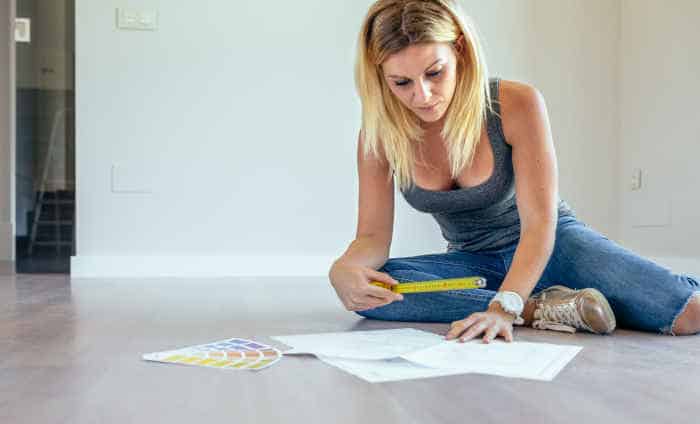
All you really need is a tape measure, a calculator (or a smartphone), and something to jot down notes. You’ll be multiplying the length by the width, so make sure to keep track of each measurement in feet.
2. Focus on Each Rectangular Room
If you have a ideal rectangular room, measuring is straightforward. For example, if the room is 10 feet long by 12 feet wide, your length x width calculation is: 10×12 = 120 Square Feet.
How to Calculate Square Footage of a Room with Odd Shapes
Another big query: “How to calculate square footage of a room” or “How to calculate the square footage of a room” if the shape isn’t a ideal rectangle? Simply divide it into smaller rectangles, measure each section, and add everything together to find the total area.
For instance, if your living room has a small alcove, treat that alcove like its own rectangular space, calculate the area (length x width), and then add it to the main section’s total. Remember, even a few extra square feet can make a difference in how much paint you need to buy.
How to Calculate Square Footage of a House
If you’re tackling a full home refresh, you might ask: “How to calculate square footage of a house?” or “How to calculate home square footage?” This often comes up when real estate agents discuss property size, but it’s just as important when planning a paint job. Here’s how:
- Room-by-Room Approach: Measure each room’s dimensions separately, then add them up to get the total square footage.
- Include Finished Basements or Attics: If you plan to paint these, include them in your measurements.
- Combine the Floors: If your home has multiple levels, add the totals for each floor. That combined number is the footage of a home you’ll be painting.
While some definitions exclude certain areas (like crawl spaces) from living space, include anything you plan to paint.
Walls vs. Painted Surface
You might also wonder why we’re focusing on the floor dimensions when painting walls. Many paint calculators start with measure the square footage of the floor, then estimate wall coverage based on average room height. However, for an even more precise measurement of painted surface, measure the walls directly:
- Perimeter: Add the lengths of all walls in the room.
- Height: Multiply the perimeter by the wall height.
- Subtract Openings: Deduct door and window areas if you want the exact painted surface in square feet (or square inch if you’re super precise).
Quick Tips for Painting
- Primer Counts: If you’re painting high traffic areas or making a drastic color change, primer can reduce the total coats needed.
- Choose the Right Finish: For rooms that must be easy to clean, like kids’ bedrooms or kitchens, consider semi-gloss or satin finishes.
- Plan for Multiple Coats: Dark-to-light transitions often need two to three coats. Use your total area to figure out how many gallons to buy.
- Always Have Extra: It’s wise to buy a little more paint than your calculations indicate. Small errors in measuring square footage can add up, and you’ll want extra for touch-ups later.
Common Questions: Square Footage FAQs
- “How to calculate room square footage?”
- Measure length and width with a tape measure, then multiply. For irregular rooms, break them into smaller shapes.
- “I have a vaulted ceiling. Should I measure differently?”
- Yes, if you’re painting the ceiling. Measure each angled section separately (length x slant height) and add them for the total ceiling area.
- “Do closets count as living space?”
- If you plan to paint them, include their footage of a room in your numbers.
Wrapping It Up
Whether you’re painting living rooms or the entire home, knowing how to calculate square footage is a game-changer. Start by measuring each rectangular room using length x width, then add sections for odd shapes. If you’re doing a full-house paint job, measure every living space (including basements and attics you intend to paint) and sum them up for the total square footage. This method is simple yet powerful and is the same approach real estate agents use to describe the footage of a home—you’re just applying it to figure out how many gallons of paint you’ll need.
Once you can accurately measure the square footage, you’ll have a solid foundation for choosing paint finishes, budgeting, and scheduling. And if the math gets overwhelming, don’t hesitate to call in a professional painter; they’ll know precisely how to handle every square inch of your project. Happy painting!
Views Expressed Disclaimer
The views, opinions, and information presented in this article are for informational purposes only and do not necessarily reflect the official policies or positions of Crocker Home Painting Company. While every effort has been made to ensure accuracy, Crocker Home Painting Company is not liable for any errors, omissions, or decisions made based on the content provided. Readers are encouraged to consult professionals for specific advice or assistance related to their unique circumstances.